Make Waves is Adrienne Outlaw’s national artist-led initiative partnering with river cities to create large-scale sculptural environments through community participation.
Constructed from community-collected post-consumer plastic, the works begin with individual acts of making. Hundreds of people contribute pieces that accumulate into monumental structures no one person could build alone. Once assembled, the sculptures become places to enter, gather, linger, and experience together.
Make Waves extends Outlaw’s studio practice into public space, giving physical form to the relationship between individual action and collective structure. Through making and gathering, the projects ask what becomes possible when individual contributions connect, and what responsibilities arise from our dependence on one another and the places we share.
Since its launch, Make Waves has been presented in St. Louis, Nashville, Grand Rapids, and Detroit through partnerships with museums, universities, festivals, airports, and civic organizations.
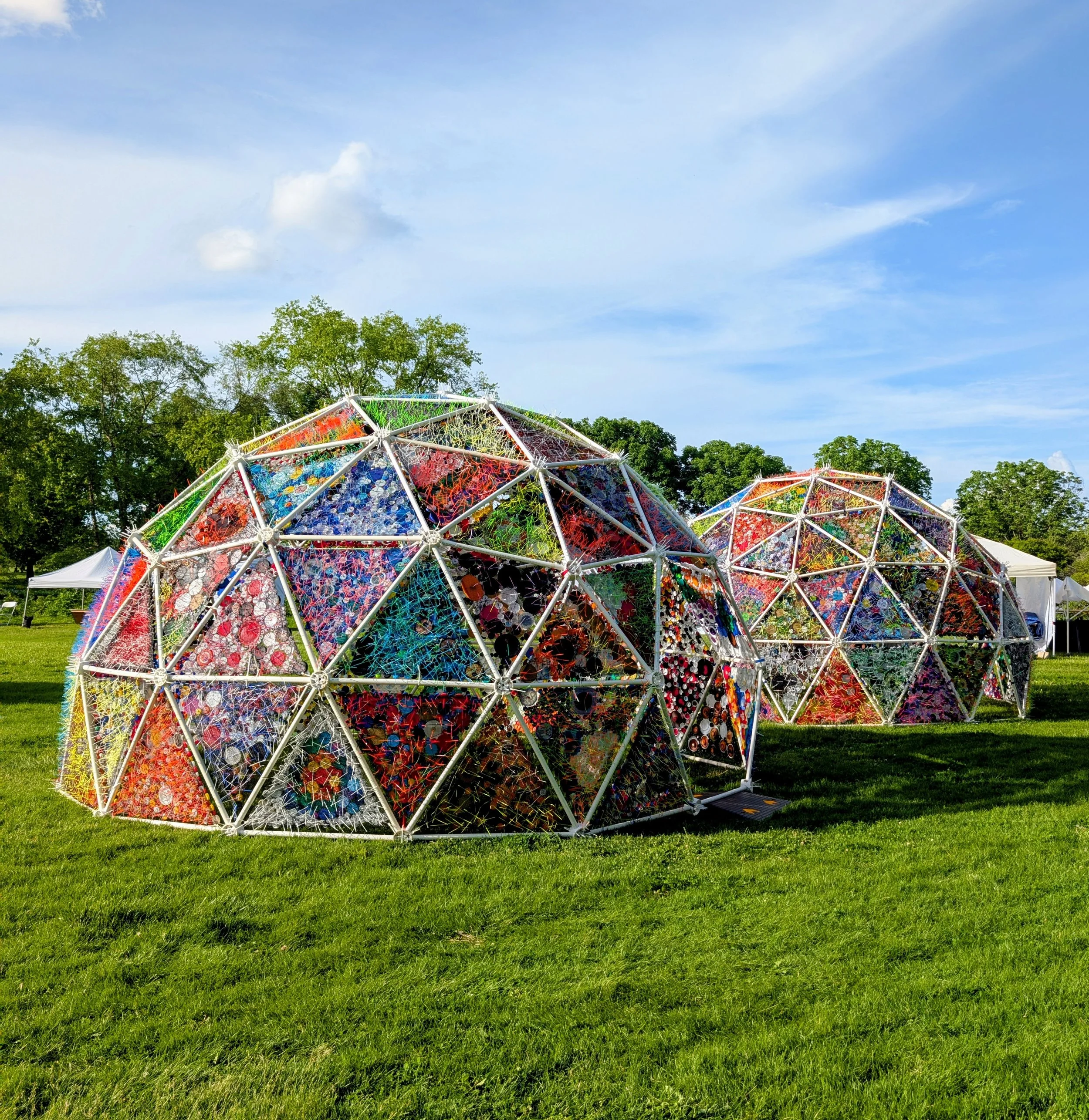
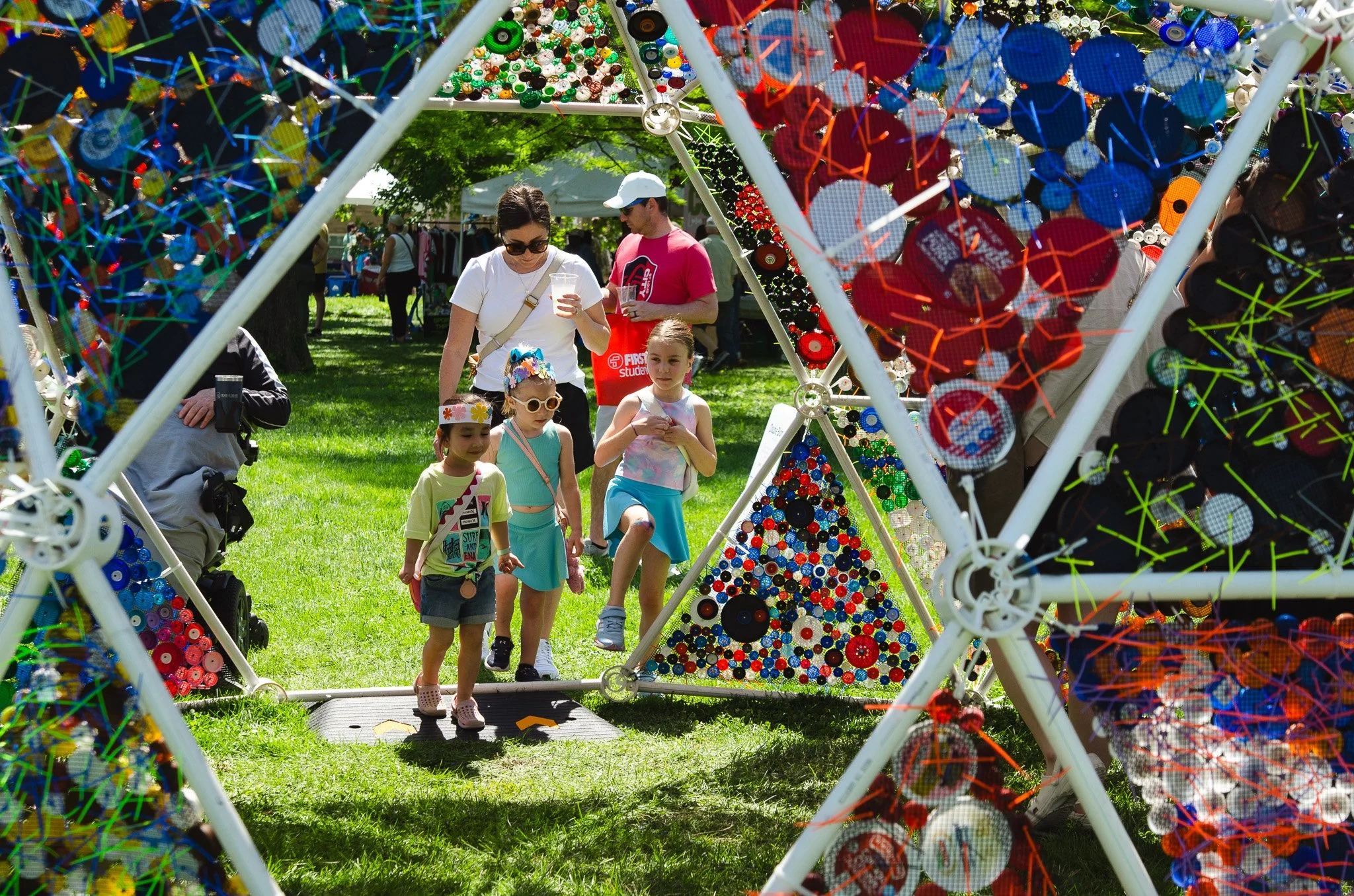
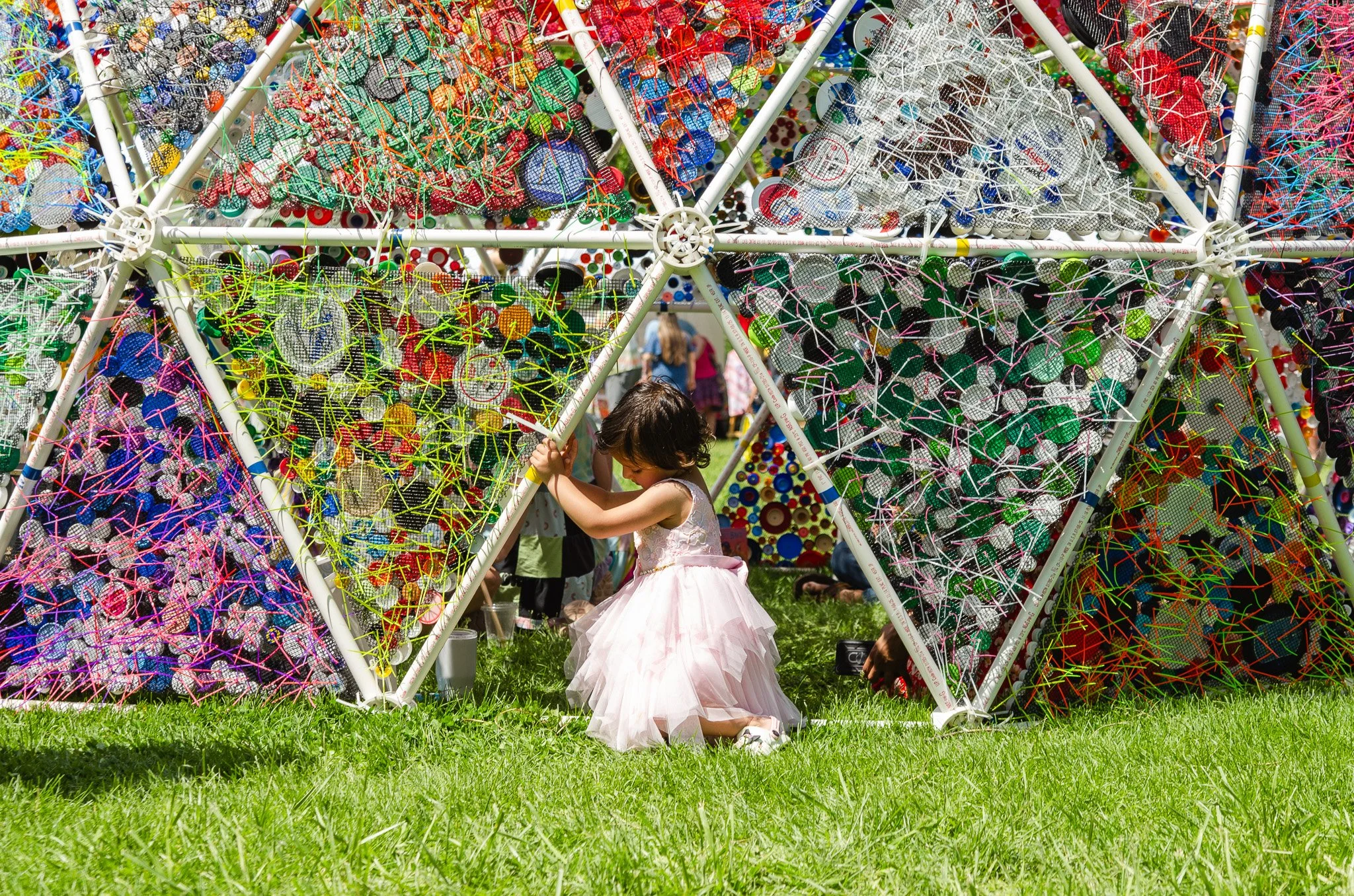
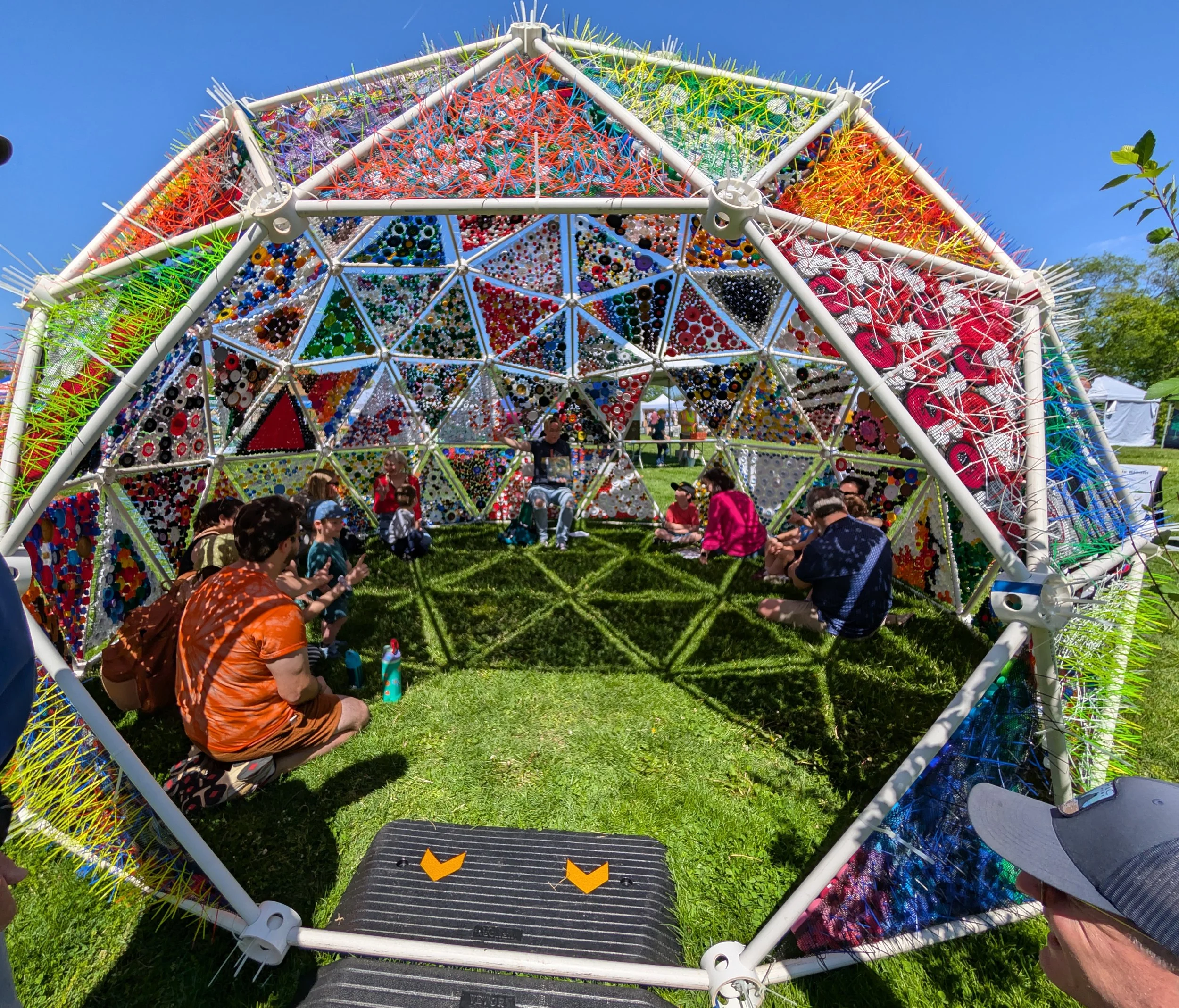
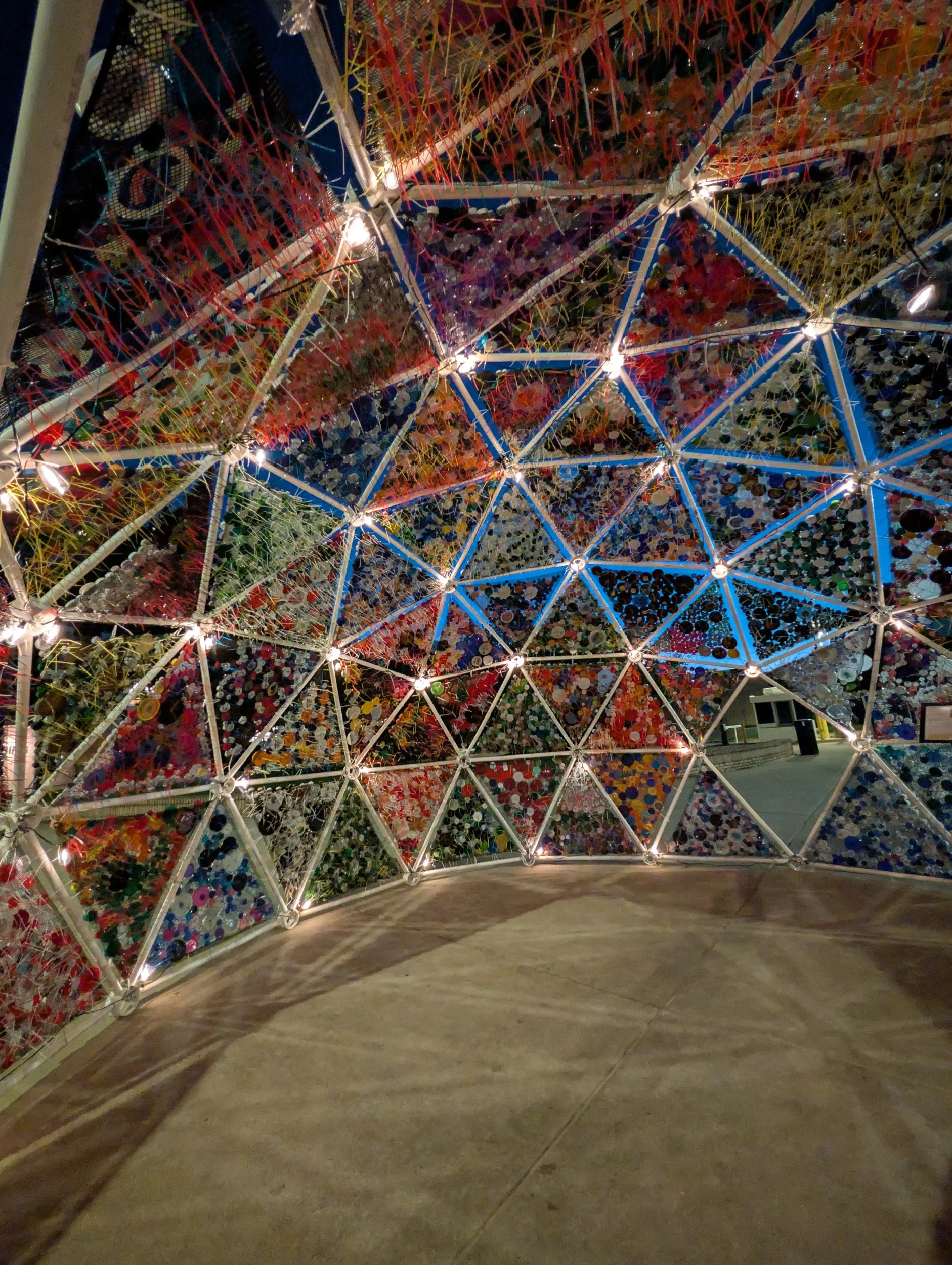
Double Bloom, 2026, consists of two 10 ft x 17 ft diameter walk-in geodesic sculptures constructed from more than 100,000 post-consumer plastic bottle caps. Developed through eight months of community collection and fabrication, the work brought hundreds of individual contributions together into two monumental structures presented at the St. Louis Earth Day Festival in Forest Park.
Visitors could enter, gather, rest, and participate in performances, storytelling, conversation, and music within the sculptures. Through color, light, collective making, and shared use, Double Bloom makes visible how individual actions accumulate into something larger while allowing each contribution to remain distinct within the whole.
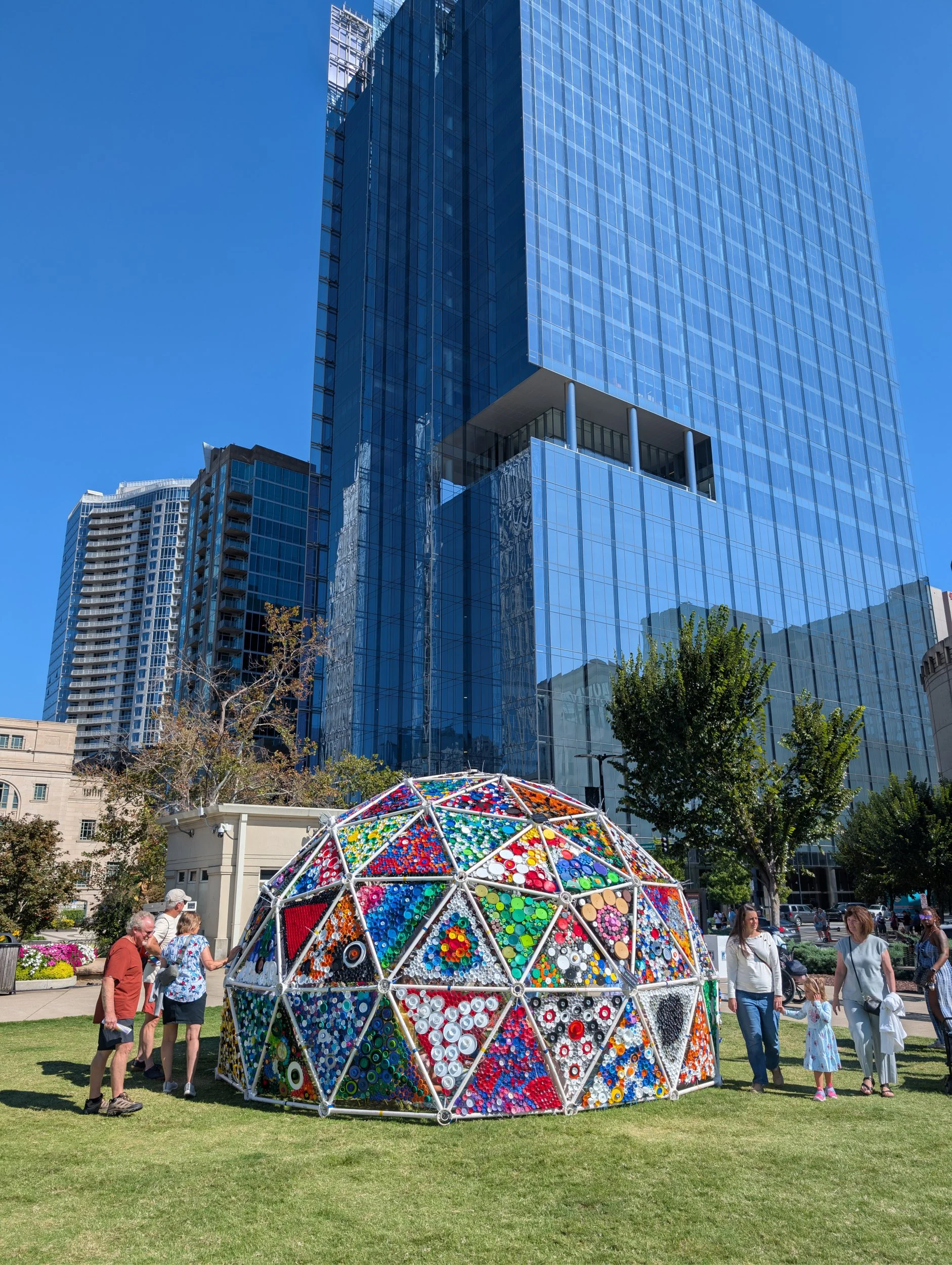
River Dome, 2025, is a 10 ft × 17 ft walk-in geodesic sculpture constructed from post-consumer plastic collected and fabricated primarily through community participation in Nashville, with additional material and fabrication support from St. Louis. Artville Nashville commissioned the work, which was installed in Music City Walk of Fame Park in downtown Nashville.
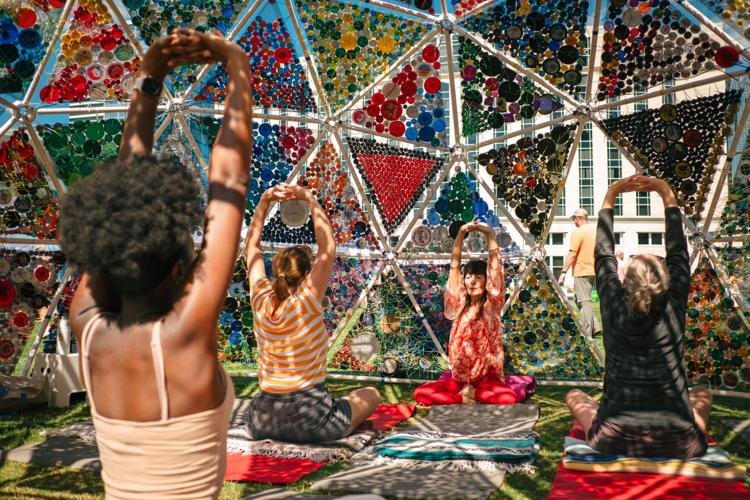
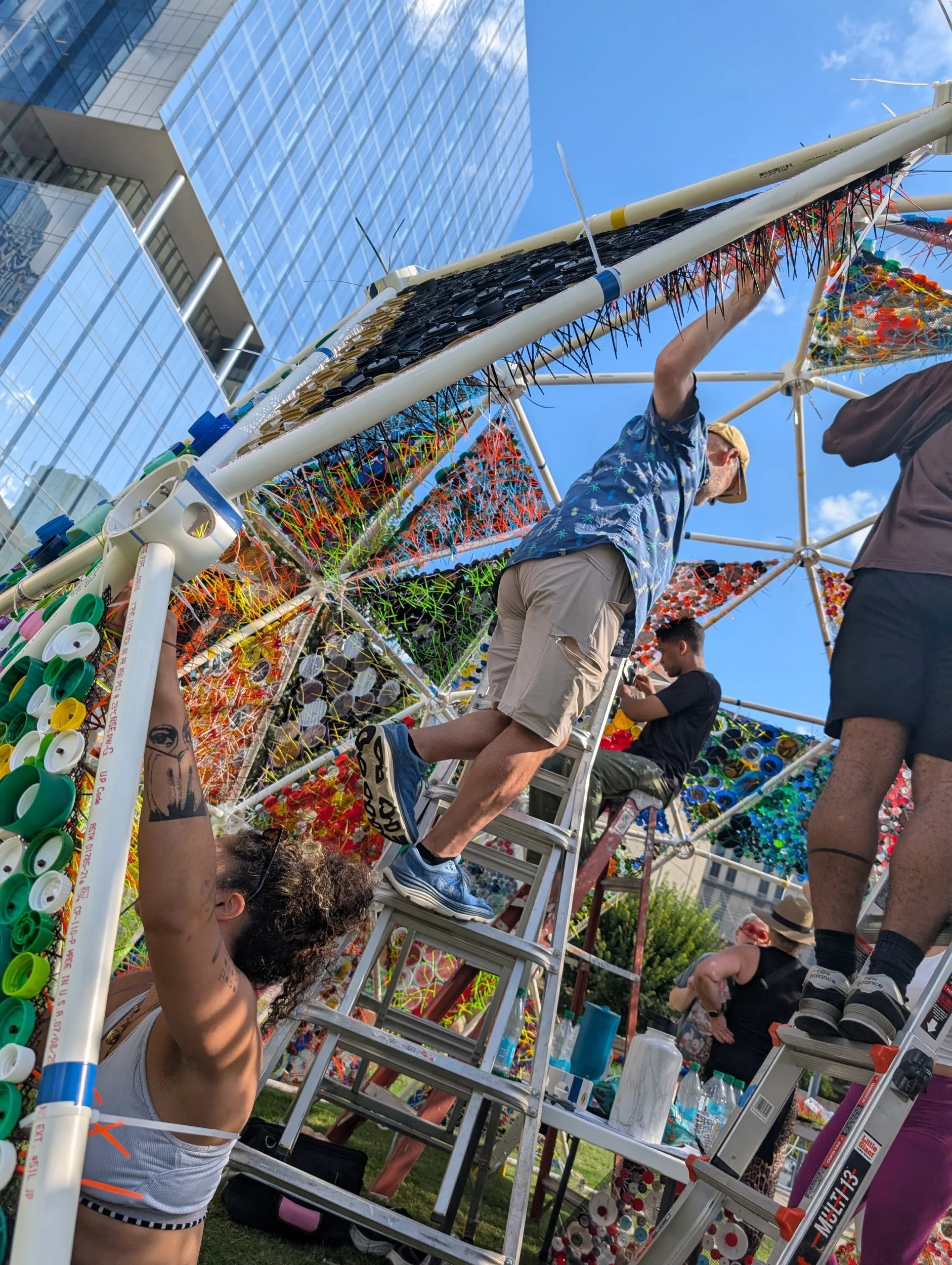
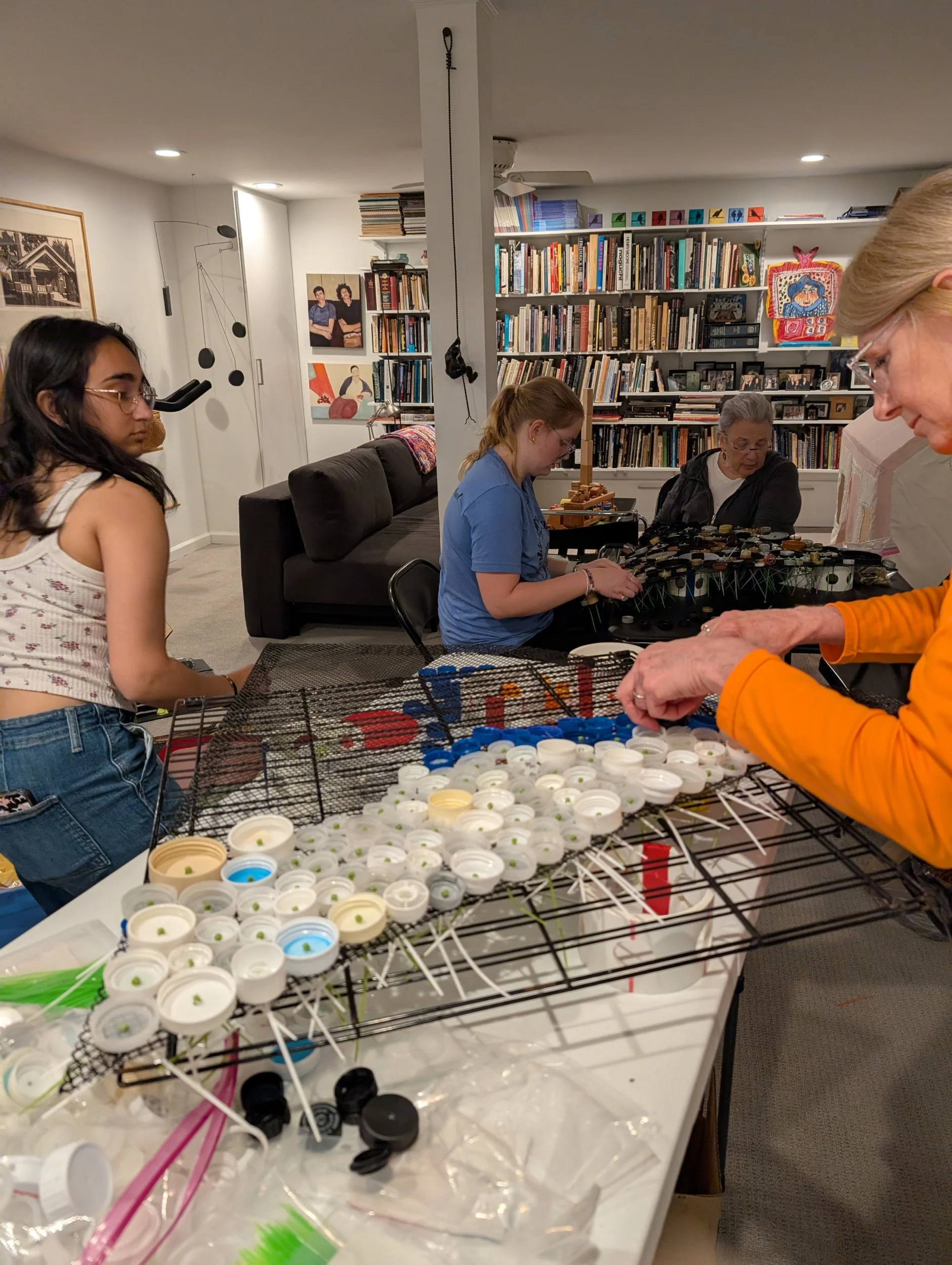
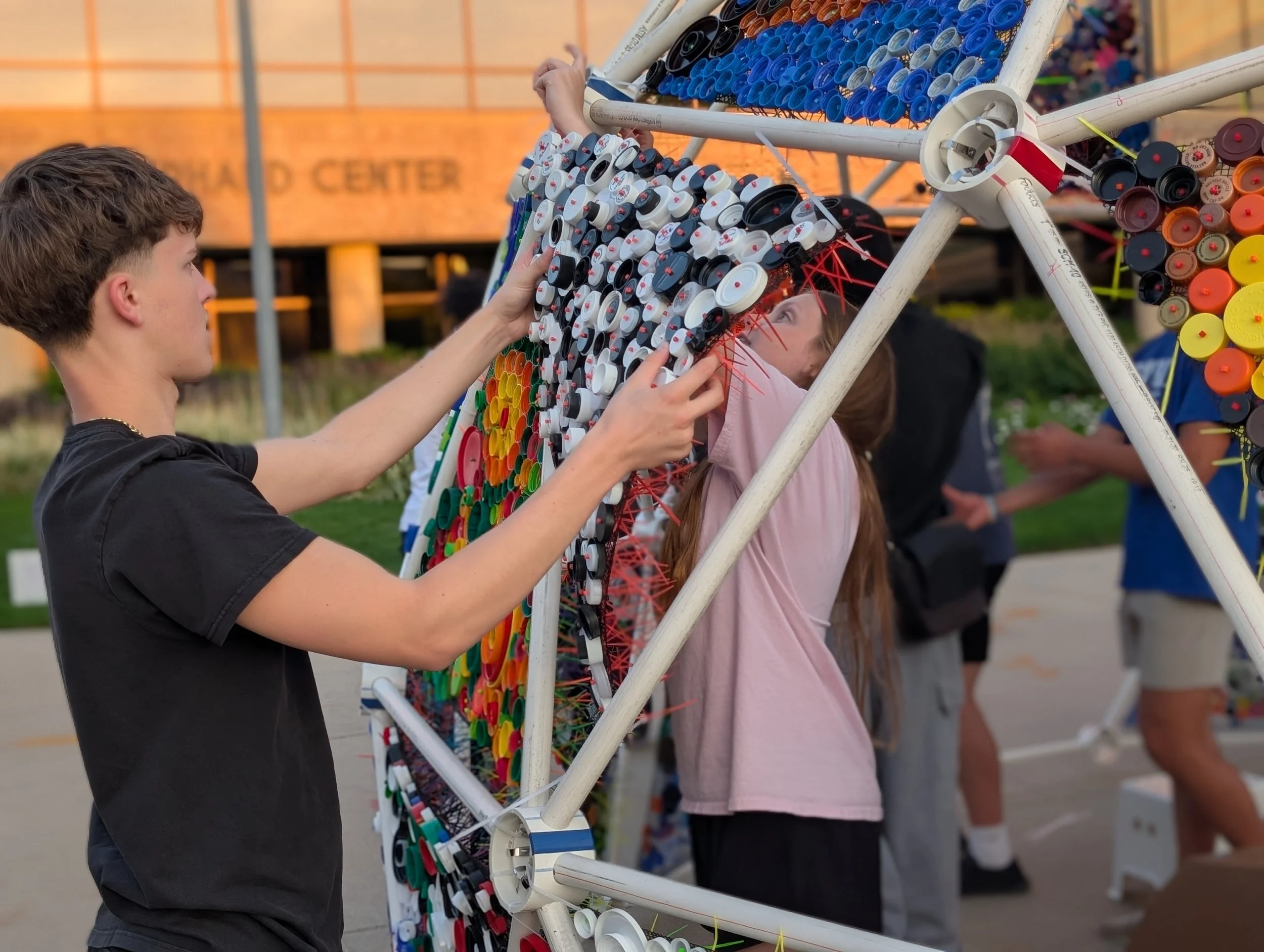
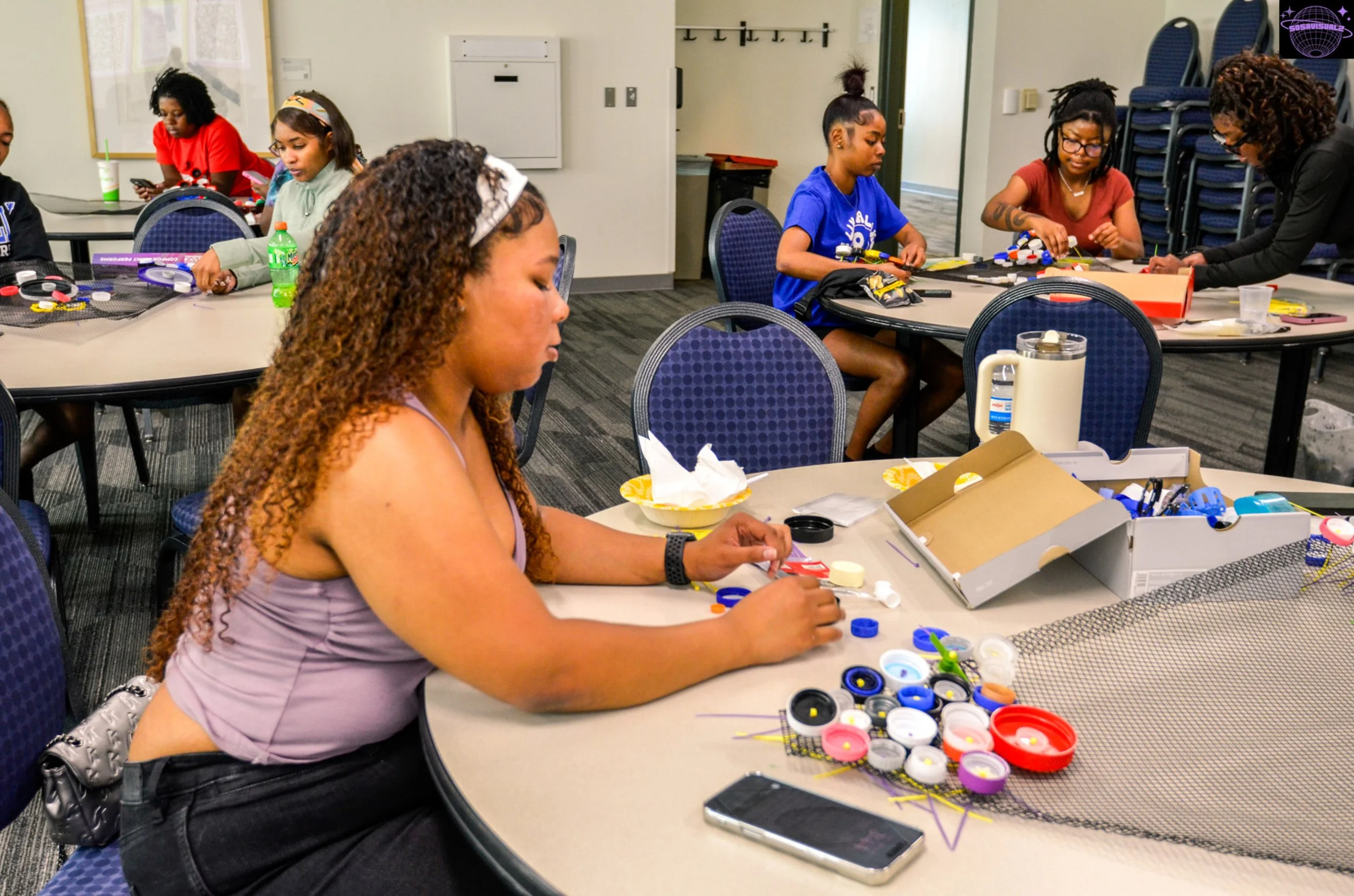
Within the Make Waves initiative, projects unfold through interconnected phases, from community collection and fabrication to public activation and use. Images document the collaborative build process, workshops, and moments of gathering within the completed installations. Participation is embedded within the structure of the work itself, where individual contributions accumulate into larger perceptual and environmental systems. Together, these phases reveal the work not as a static object, but as a living structure shaped through collective care, engagement, and transformation over time.
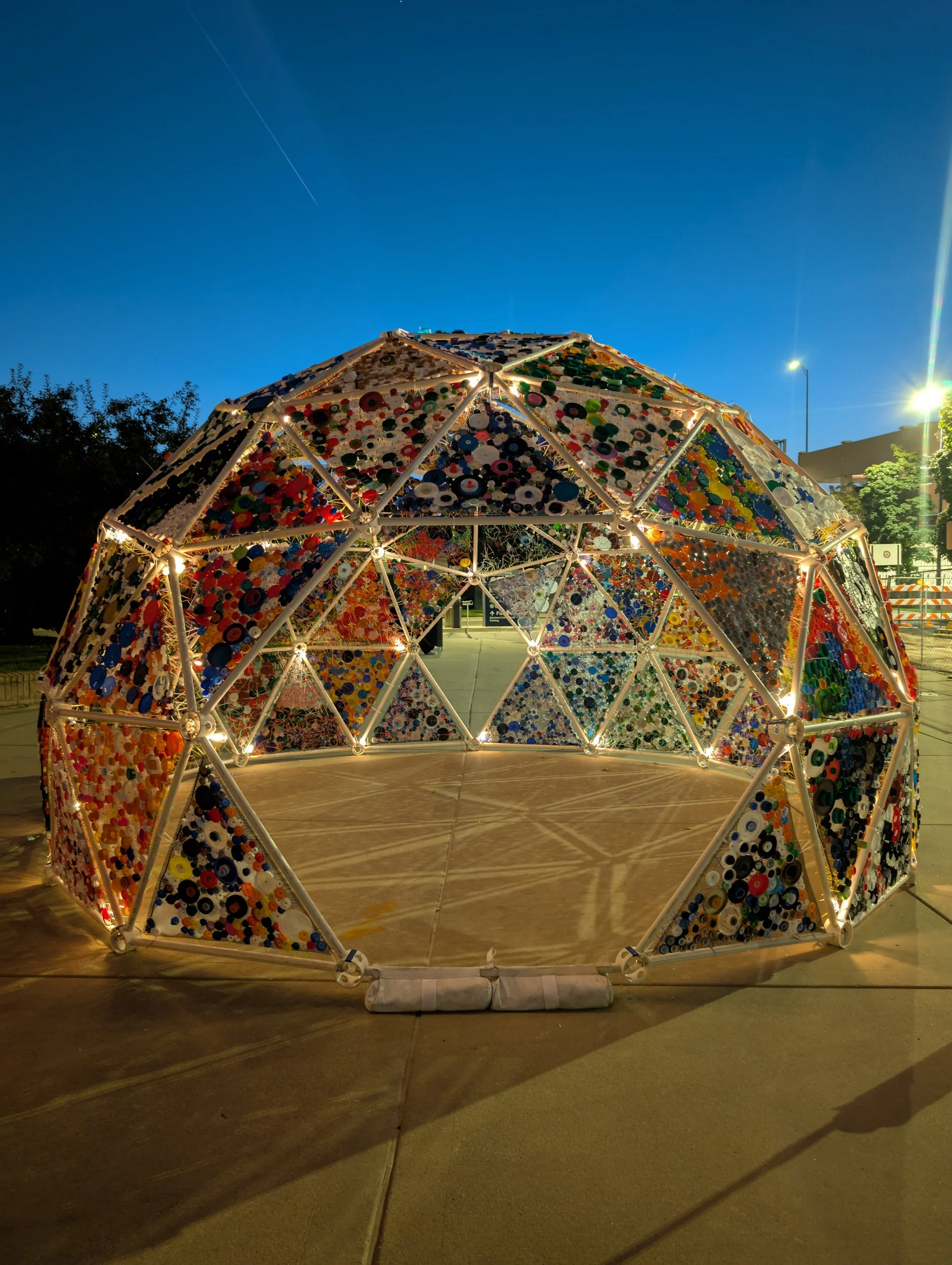
Grand Dome, 2025, was presented by the Grand Valley State University Art Museum as a featured work for ArtPrize in Grand Rapids, Michigan. The 10 × 17-foot geodesic sculpture was constructed from post-consumer plastic collected and fabricated primarily in Michigan with the participation of GVSU students and community members.
Illuminated after dark by solar-powered lights, Grand Dome served as both sculpture and gathering place. Its translucent surfaces shifted with changing light and perspective as visitors moved around and through the work.
Sea Change – St. Louis Lambert International Airport
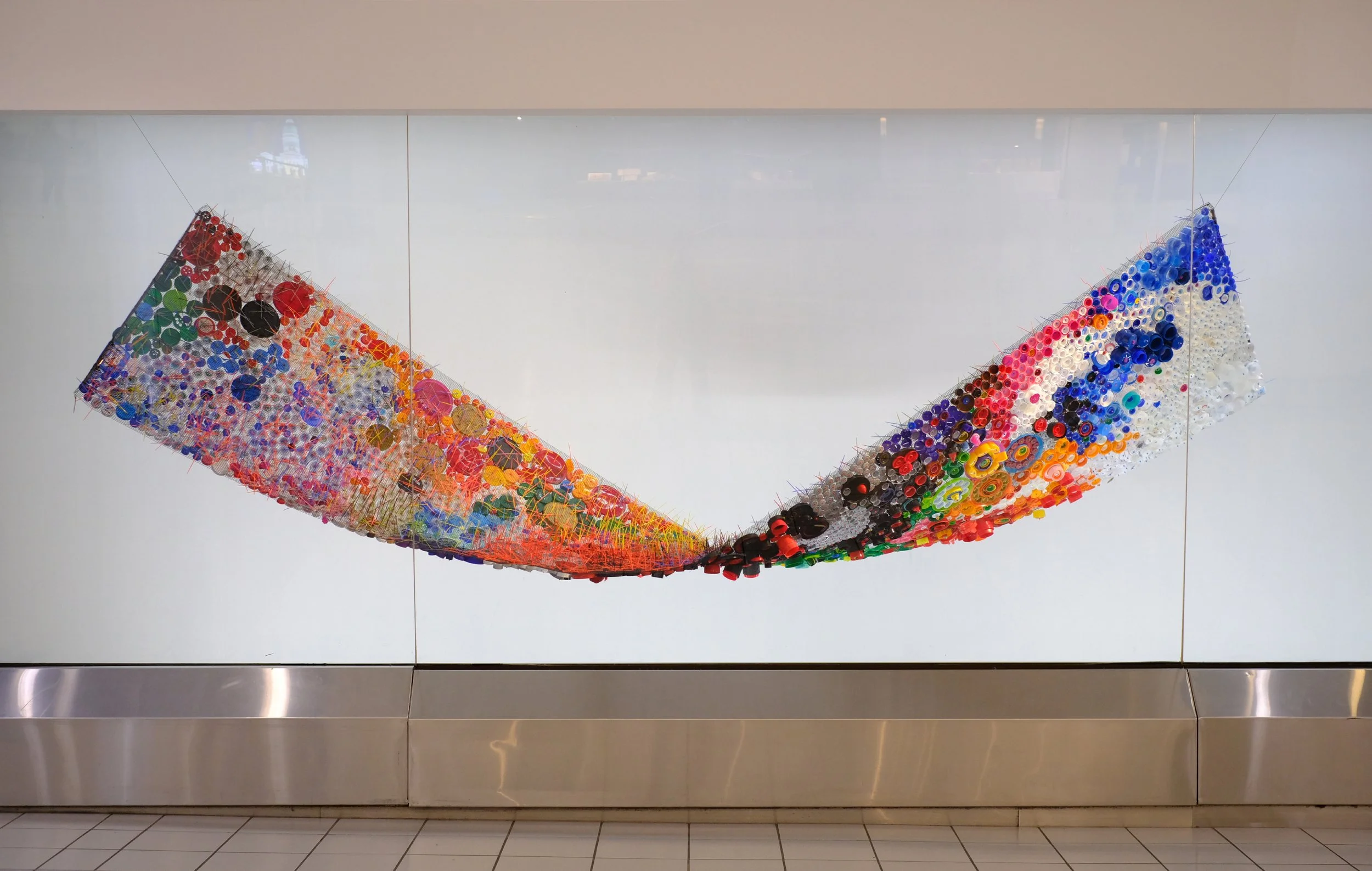
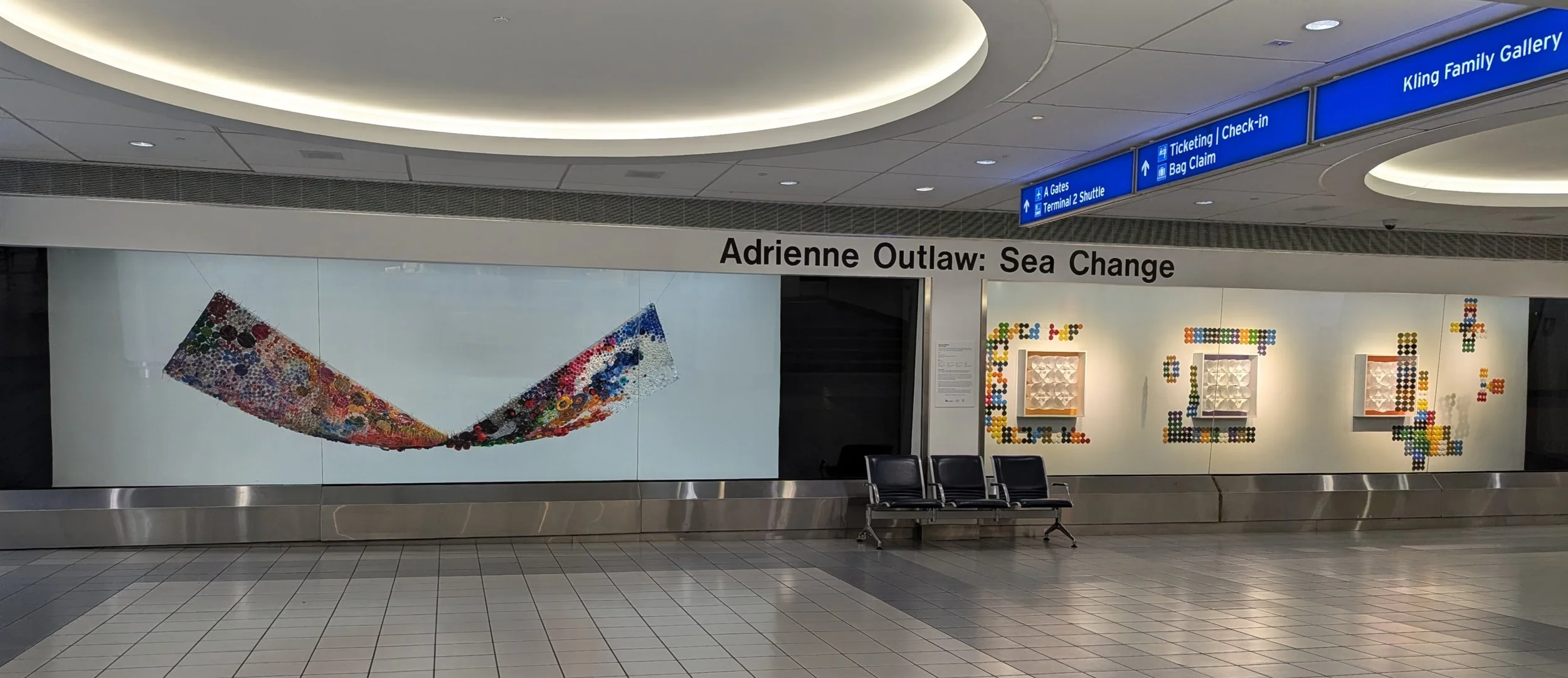
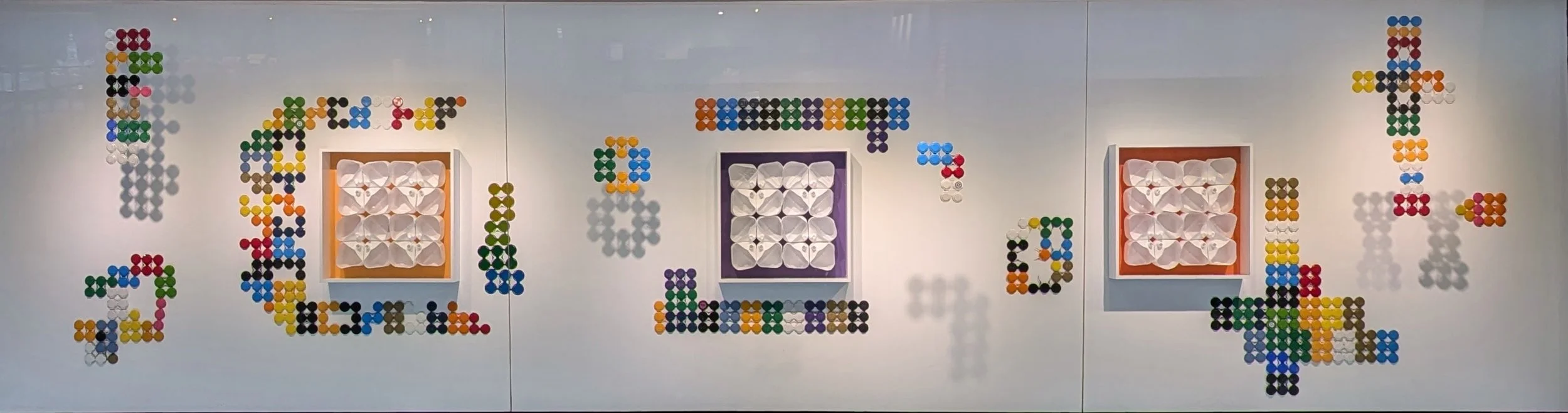
Sea Change, 2025–26, is a 60-foot sculptural installation commissioned for St. Louis Lambert International Airport and the first public artwork Make Waves developed. Constructed from community-collected post-consumer plastic, the work spans two window bays and changes dramatically as travelers pass by.
Individual pieces of plastic accumulate into larger fields of color and form, shifting between transparency and density depending on the viewer’s position. The work established a central principle of Make Waves: individual contributions can retain their identity while becoming part of a larger structure.